Water treatment membranes: One platform for every salinity
Desalination produces more brine than freshwater; a linked chain of water treatment membranes recovers more water and turns the rest into product.
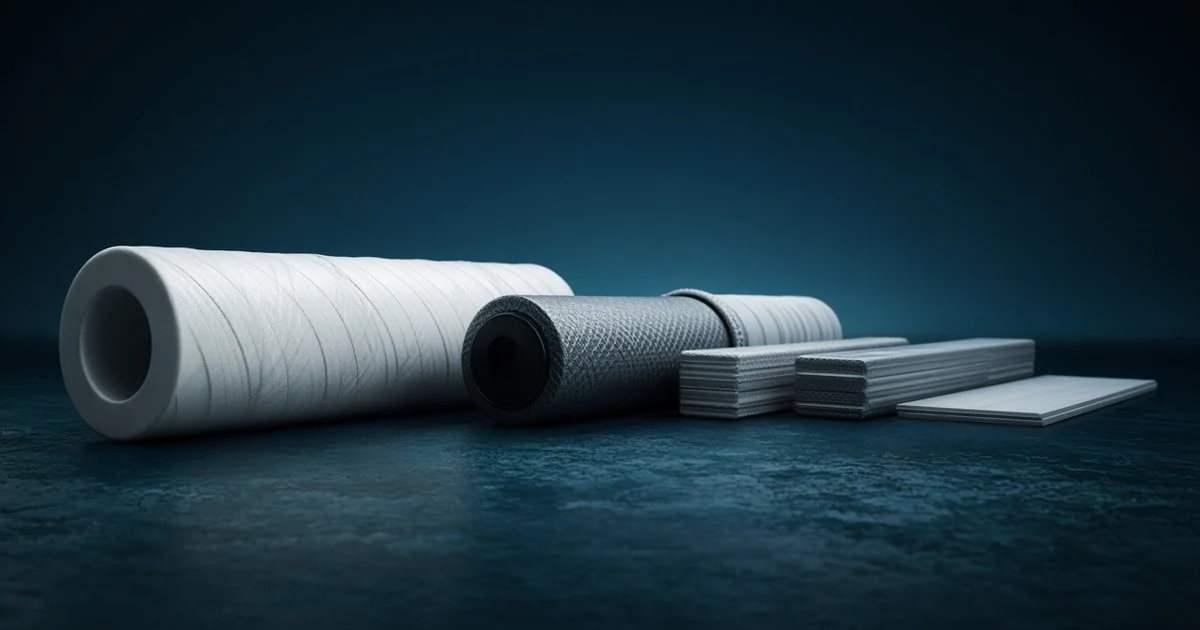
Water treatment membranes are the layer inside every MediSun machine. They sit inside WaterCube, i-WaterHub, RECLAR and BrineHouse, so each plant’s output starts at the membrane (WaterCube: A containerised water treatment plant that moves; BrineHouse: BWRO brine treatment that recovers the water).
Desalination makes 1.5 litres of brine for every litre of water
The world’s 15,906 operational desalination plants produce 95.37 million m³/day of water. They also produce 141.5 million m³/day of brine, about 1.5 times the freshwater output (Jones et al., 2019).
Brine disposal is costly and carries negative environmental impacts (Jones et al., 2019). Water treatment membranes decide how much of that feed becomes product. Every stage that recovers less water leaves more brine for the next stage, or for the sea.
The answer is not one better membrane. It is a better chain.
Water treatment membranes work as a chain, not a catalogue
The treatment train is a chain. Every stage inherits what the stage before failed to remove. Every link is engineered against kWh/m³ (MediSun membrane portfolio film).
- GUF clears the feed: MediSun Graphene Ultrafiltration, engineered with Khalifa University, is an absolute barrier at 0.02 µm, so downstream membranes run longer between replacements.
- NF, BWRO and SWRO do the bulk separation on one platform: one element, one vessel, one footprint, with salinity as the only variable.
- HSRO takes over where conventional RO stops, concentrating brine to 150 g/L at a fraction of the pressure.
- AEM, CEM and BPM sheets move ions with electric current, and bipolar electrodialysis splits waste salt into acid and base without added chemicals.
The order matters. A poor pretreatment stage shortens RO life. A poor RO stage sends more volume to brine treatment.
NF does a different job from RO. It removes hardness, sulphate, colour and organics at a fraction of RO pressure, and lets monovalent ions pass (MediSun membrane portfolio film). BWRO and SWRO then remove the dissolved salts on the same element and vessel.
Conventional RO stops when osmotic pressure wins, which is why zero liquid discharge is expensive. HSRO changes the physics at the brine end. It places a controlled brine on the permeate side, so the osmotic pressure difference collapses. The same concentration then needs a fraction of the pressure, and HSRO does the work of DTRO without DTRO’s maintenance burden (MediSun membrane portfolio film).
Ion-exchange membranes close the chain. The BPM is built in a single step, with anion and cation layers on one sheet around an interfacial catalytic layer, so it does not delaminate. In a bipolar electrodialysis stack, AEM, CEM and BPM sheets split waste salt into acid and base with no chemicals added.
Each link carries a number
These figures come from MediSun’s membrane film and BPED catalogue.
- GUF: 51 m² active area in a 225 mm module, absolute barrier at 0.02 µm (MediSun membrane portfolio film).
- RO/NF elements: 41 m² (440 ft²) per 8040 element, in 4040 to 8040 formats on the same rack and spares (MediSun membrane portfolio film).
- HSRO: concentrates brine to 150 g/L (MediSun membrane portfolio film).
- Ion-exchange membranes: AEM perm-selectivity ≥95% to ≥98%, CEM ≥97% to 98%, BPM transport number ≥0.98, all across pH 0–14.
- Manufacturing: 90,000 m²/year membrane capacity, 47 national patents, 3–5 year service life.
The ion-exchange sheets range from 400 × 800 mm up to 1.2 m industrial sheets (MediSun membrane portfolio film).
The numbers connect. A 0.02 µm barrier protects each 41 m² RO element. The RO stage sets the volume that reaches HSRO, and HSRO sets the concentration that reaches electrodialysis.
The chain applies from brackish wells to industrial brine
Different plants enter the chain at different points. The platform lets one supplier cover the whole range.
Brackish groundwater plants inland run BWRO, the workhorse of industrial supply. They have no marine outfall, so every percentage point of recovery reduces trucking or pond area. HSRO and electrodialysis extend recovery past the point where conventional RO stops.
Seawater plants across the Gulf run SWRO on feeds of 35,000 mg/L and up (MediSun membrane portfolio film). Saudi Arabia, the UAE, Kuwait and Qatar account for 55% of global brine production (Jones et al., 2019). NF ahead of SWRO strips scale-forming ions so the RO recovers more for longer.
Industrial users in chemicals, lithium and food processing need salt turned into product. Bipolar electrodialysis regenerates acid and caustic from waste salt. A three-compartment BPED stack produces acid up to 73 g/L HCl and alkali up to 80 g/L NaOH. ED concentration stacks take concentrate to 160–200 g/L ahead of that step.
Membranes are the layer MediSun makes itself
Every stage in this chain is in commercial supply. GUF, the RO/NF platform, HSRO and ion-exchange membranes are available as products. BPED has documented industrial installations, including a 10,000 t/a lithium hydroxide plant.
Inside every MediSun machine, one layer is MediSun’s own: the membranes (MediSun master film). WaterCube, i-WaterHub, RECLAR, VASAR, HYDAR and BrineHouse all depend on it. The polymeric heat exchanger is the other half of that layer.
This matters for owners. One membrane supplier across the chain means one set of spares, one service team and one engineering basis. Interfaces between stages are designed together, not negotiated after delivery.
Specifiers gain a simpler procurement path. The same element formats, vessel ratings and spares cover NF, BWRO and SWRO duties, so a plant that changes feed source changes elements, not racks.
Water from every salinity, made wherever it is needed.
Next step: Read the other layer inside every machine: P-HEX: a polymer heat exchanger for data centres.