P-HEX: A polymer heat exchanger for data centres
Metal heat exchangers are costly, heavy and prone to corrosion; P-HEX uses a 100 µm polymer wall to cut cost and weight.
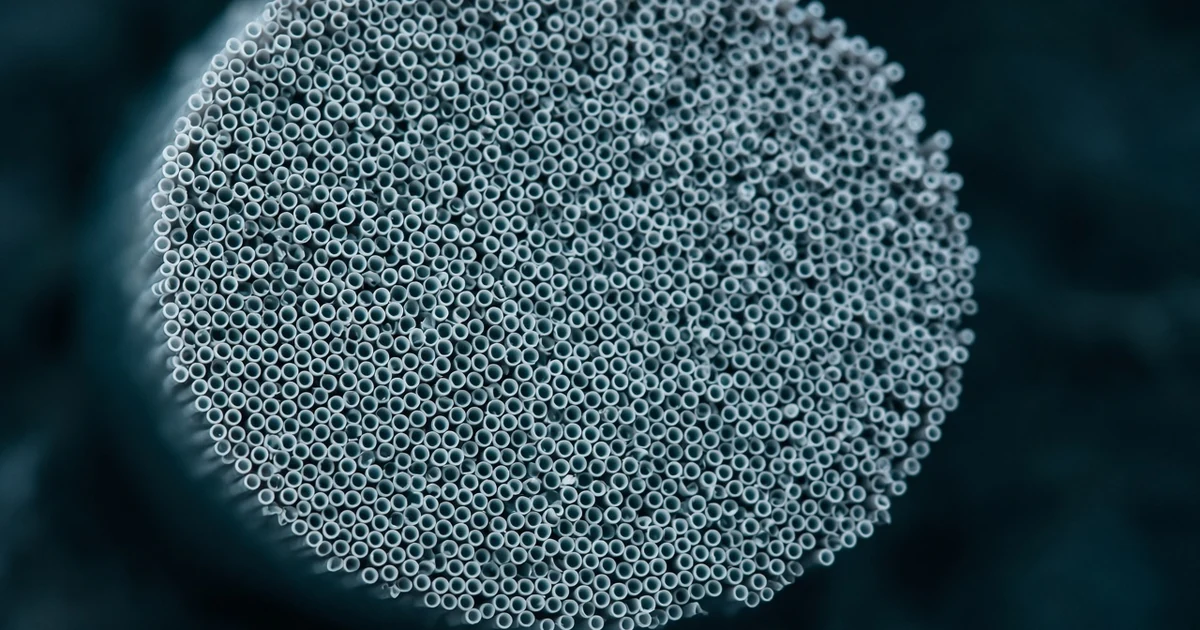
Heat recovery runs on heat exchangers, and metal ones corrode
US industrial processes emit more than 10 quads (10,000+ TBtu) of thermal emissions a year (US DOE, 2015). Not all of it is recoverable. Recovering any of it needs heat exchangers.
A polymer heat exchanger replaces metal in that duty. Metal units can cost up to US$1,000 per kWth (MediSun P-HEX film). They are heavy, and brine, acid and chlorides corrode them.
Data centres add a purity constraint. Metal in the wetted path works against high-purity coolant.
Polymers conduct heat poorly in thick sections. P-HEX answers that with wall thickness.
How the P-HEX polymer heat exchanger moves heat
- Wall. P-HEX uses a 100 µm thin polymer wall (MediSun P-HEX film).
- Physics. At that thickness, wall thickness dominates thermal resistance, so the polymer transfers heat on par with stainless steel.
- Geometry. Lung-inspired topologies and hollow-fibre bundles pack a large transfer surface into a small volume.
- Durability. The polymer resists fouling, scaling and corrosion from brine, acid and chlorides.
- Scale. Units combine into a Power Brick, Power Bricks combine into a containerised skid, and arrays run in parallel.
The design moves the limiting factor from material to geometry. Thin walls carry the heat. Polymer carries the chemistry.
Thermal resistance rises with wall thickness. A metal wall in corrosive service is built thicker to allow for corrosion. A polymer wall that the chemistry does not attack can stay thin.
The P-HEX numbers
- Effectiveness: more than 95% thermal effectiveness, from lung-inspired topologies and hollow-fibre bundles (MediSun P-HEX film).
- Capital cost: 50–80% lower than metal heat exchangers (MediSun P-HEX film).
- Weight: 90% lighter than metal; one person installs a module by hand (MediSun P-HEX film).
- Data-centre density: +101% power density versus a standard plate exchanger, roughly double (MediSun P-HEX film).
- Skid rating: a containerised skid rated at 18 MW heat rejection (MediSun P-HEX film).
Cost and weight compound. A lighter module needs lighter supports and no lifting equipment at installation.
Data centres gain density, purity and reusable heat
Data-centre cooling is the lead application. P-HEX roughly doubles power density against a standard plate exchanger (MediSun P-HEX film). That frees floor space in the plant room. Plant-room space carries a cost in a data centre. Equipment that rejects the same heat in less volume leaves more room for compute load.
The wetted path is fully non-metallic. High-purity coolant therefore stays pure, with no metal ions leaching into the loop.
Recovered heat also becomes useful. P-HEX enables heat reuse, such as district heating, and lower power usage effectiveness (PUE).
Industrial plants are the second application. P-HEX already runs in breweries and food-processing plants (MediSun P-HEX film).
Brine and acid duties are a fit by design. These streams carry the chlorides and acids that corrode metal. The polymer surface resists them (MediSun P-HEX film). Desalination plants and brine concentrators are examples.
Corrosion resistance changes the maintenance plan as well as the material choice. A surface that resists fouling and scaling holds its performance between cleanings. A module light enough to lift by hand can be swapped without cranes or shutdown crews.
Inside every MediSun machine, one layer is MediSun’s own: the membranes and the polymeric heat exchangers (MediSun master film).
Licensing, validation and manufacture
P-HEX is licensed by and engineered by Trevi Systems, validated by the U.S. Department of Energy, independently audited by T2M Global, and manufactured exclusively by MediSun and Virtue (MediSun P-HEX film).
MediSun manufactures the modules. The modular build lets one unit become a Power Brick, and Power Bricks become containerised skids. Arrays then scale in parallel to match the heat load. A data hall and a brewery can therefore draw on the same module, sized by count rather than by custom fabrication.
P-HEX is running in plants today
P-HEX is commercial. It already runs in breweries and food-processing plants (MediSun P-HEX film). Data-centre deployments use the same modules at higher density.
Large heat loads scale by adding modules in parallel, not by fabricating a larger unit. Engineers can trial a single module before committing an array. The same module then scales by count to the full duty.
Heat exchange is part of the water story. Every desalination plant, brine concentrator and cooling loop moves heat. Lighter, cheaper and corrosion-resistant exchangers make small, distributed plants cheaper to build.
The next generation of infrastructure will run cooler, lighter and closer to where it is needed.
Next step: See P-HEX module formats and application notes on the P-HEX product page.