WEGen Green: Magnesium carbonate from brine and CO₂
Desalination brine and industrial CO₂ are both disposal problems; WEGen Green combines them into high-purity magnesium carbonate and magnesium oxide.
Desalination makes 1.5× more brine than fresh water
Desalination plants worldwide produce 141.5 million m³/day of brine. That is about 1.5× the 95.37 million m³/day of desalinated water they make (Jones et al., 2019).
Saudi Arabia, the UAE, Kuwait and Qatar account for 55% of global brine production (Jones et al., 2019). Brine disposal is costly and carries negative environmental impacts.
That brine carries dissolved magnesium. Industry along the same coasts emits CO₂. Making magnesium carbonate from brine puts both waste streams to work in one process.
WEGen Green makes magnesium carbonate from brine in four steps
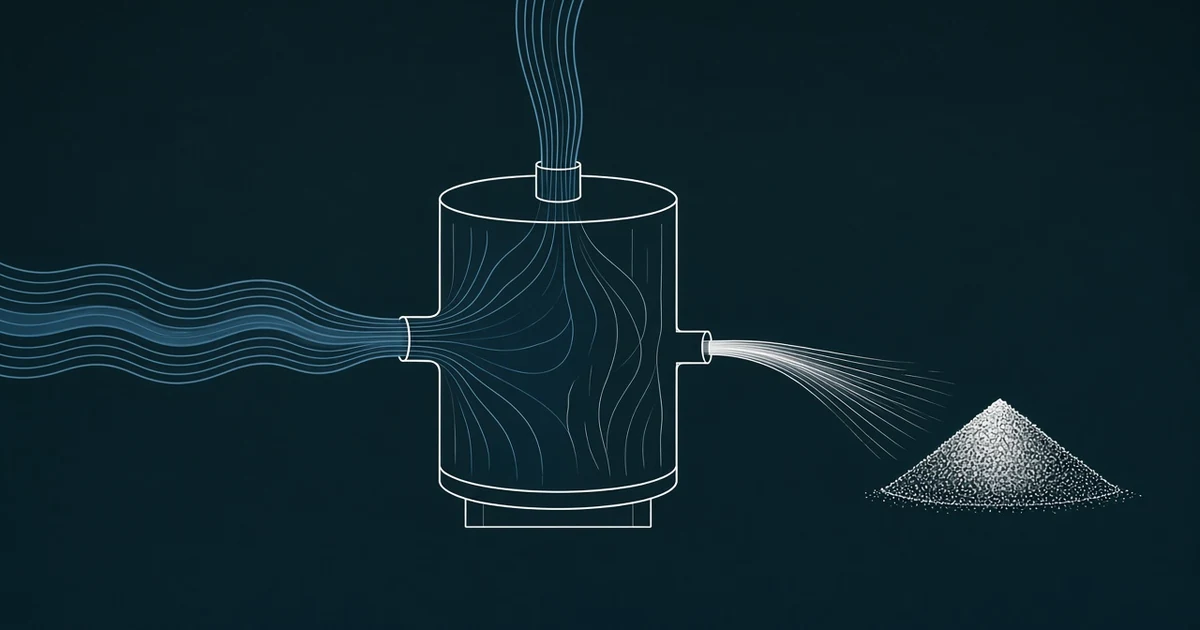
WEGen Green is the minerals core of the MediSun platform. It takes desalination brine and industrial CO₂ and makes high-purity magnesium carbonate (MgCO₃) and magnesium oxide (MgO).
The process runs in four steps.
- Precipitate: brine mixes with sodium hydroxide (NaOH), and the magnesium drops out as magnesium hydroxide, Mg(OH)₂.
- Separate: a centrifuge pulls the Mg(OH)₂ slurry out of the remaining brine.
- Carbonate: CO₂ enters the slurry as nano- and microbubbles and forms hydromagnesite.
- Dry: the line dewaters the hydromagnesite and dries it into MgCO₃ or MgO.
Each step is a familiar unit operation: mixing, centrifuging, gas injection and drying.
Step three is where the carbon goes. The CO₂ leaves the gas phase and becomes part of a solid mineral. The MediSun master film puts it in one line: brine meets carbon and becomes magnesium at 95% purity, locking CO₂ away as it works (MediSun master film).
Step one uses sodium hydroxide. That is the same alkali that bipolar membrane electrodialysis (Bipolar membrane electrodialysis: Acid and caustic from salt) makes from waste salt.
Brine mineral recovery in four figures
These figures come from the MediSun WEGen Green Brochure. Each is quoted per tonne of brine or per unit of product.
- 95% magnesium recovery from the brine feed.
- 95% purity for the MgCO₃ product.
- 8–17 kg of MgCO₃ per tonne of brine, depending on the quality of the source water.
- 3.1 kg of CO₂ offset per tonne of brine processed.
The yield range matters for project sizing. Magnesium content varies from one source water to the next. Each site therefore starts with an analysis of its own brine.
Daily output scales with the brine flow a plant sends to the line. A plant with a larger reject stream recovers more mineral and binds more CO₂ each day.
One line makes four magnesium products
Magnesium recovery from brine yields more than one material. Each of the four materials in the process has its own uses.
- Magnesium carbonate (MgCO₃) goes to eco-friendly construction materials and industrial uses.
- Magnesium hydroxide (Mg(OH)₂) goes to wastewater treatment and flame retardants.
- Magnesium oxide (MgO) goes to refractories, agriculture and battery technologies.
- Hydromagnesite goes to carbon sequestration, ceramics and fire-resistant coatings.
Four products give the plant owner more than one market.
Gulf coasts hold the brine and the CO₂ in one place
The Middle East and North Africa region produces 48% of the world’s desalinated water (Jones et al., 2019). The same region hosts heavy industry, including the steel plant at the centre of Project Elixir.
WEGen Green fits sites where those two streams sit close together:
- Seawater desalination plants with a large, steady brine discharge.
- Industrial parks that run their own desalination and emit CO₂ on the same site.
- Steel plants that use magnesium-bearing minerals in their furnaces.
Brine at these sites already exists as a discharge. WEGen Green treats that discharge as feedstock, so the site gains a product without a new water source.
CO₂ mineralisation at the plant gate removes a transport step. The mineral leaves the site as a dry product, not as a liquid waste.
WEGen Green is in pilot with a steelmaker in Abu Dhabi
WEGen Green is at pilot stage. Under Project Elixir, a WEGen Green pilot at EMSTEEL in Abu Dhabi processes 30 m³/day of brine. It captures CO₂ and produces up to 300 kg/day of MgCO₃ (PR Newswire, 23 May 2025).
The pilot tests the brochure figures at a working industrial site. It also tests an end use: EMSTEEL trials the MgCO₃ as a lower-carbon substitute for dololime in its electric arc furnace (PR Newswire).
MediSun first set out the process in Turning brine. The next post covers the Elixir pilot in detail.
A decentralised water network can return minerals, not only water, to the economy around it.
Brine is a mineral deposit that refills every day.
Next step: Read how the pilot is set up at EMSTEEL in Project Elixir: brine to steelmaking minerals in Abu Dhabi.