WEGen Green: Turning Brine Into Value
As brine discharge pollutes our oceans, MediSun's advanced CCUS technology transforms waste into valuable magnesium carbonate, reducing greenhouse gases simultaneously.
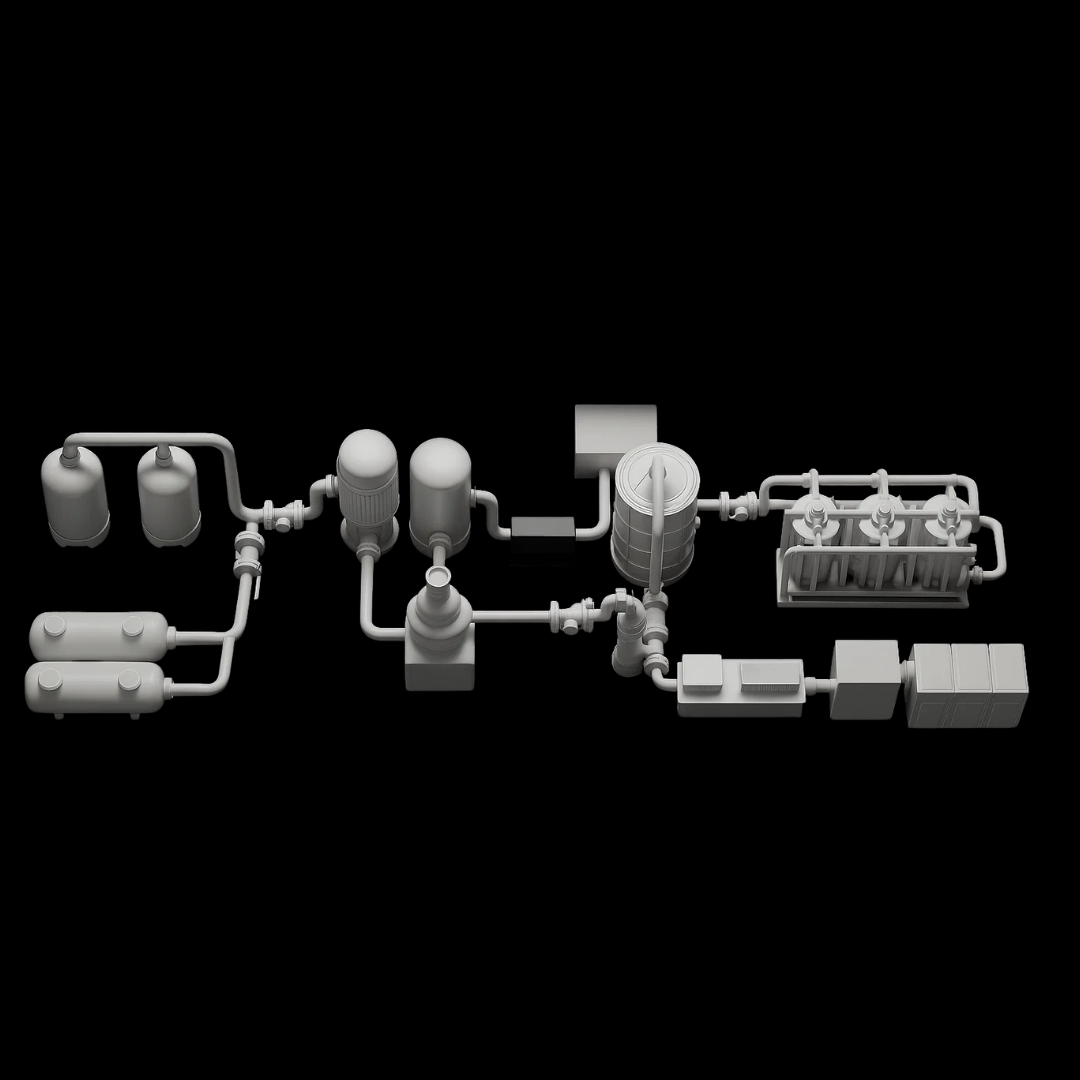
Brine: From Liability to Asset
For every litre of freshwater produced by a desalination plant, approximately 1.5 litres of highly concentrated brine is discharged back into the sea. Globally, this amounts to 142 million tonnes of hypersaline waste every single day — a figure that is growing as water scarcity drives desalination capacity to record levels.
The consequences are severe. Brine discharge depletes dissolved oxygen in coastal waters, creates dead zones around outfalls, and stresses marine species that cannot tolerate rapid salinity fluctuations. For coastline ecosystems already under pressure from warming and acidification, brine discharge is an accelerant of damage.
WEGen Green is MediSun's answer to this crisis — a system that doesn't merely reduce the harm of brine discharge, but eliminates it by turning brine into a resource.
The CCUS Mechanism
WEGen Green operates on a carbon capture, utilization, and storage (CCUS) principle. The system takes two industrial waste streams — desalination brine and industrial CO₂ — and combines them through a controlled chemical process to produce a stable, valuable solid mineral.
The process unfolds in four steps:
- Brine Treatment: Desalination brine is mixed with sodium hydroxide (NaOH), precipitating magnesium hydroxide (Mg(OH)₂) — a compound naturally rich in the magnesium content of seawater.
- Slurry Separation: The Mg(OH)₂ slurry is separated from the treated brine using centrifugation, concentrating the magnesium for the next stage.
- Nanobubble Carbonation: Industrial CO₂ is injected into the slurry using MediSun's proprietary nanobubble reactor — a system that maximizes gas-liquid contact surface area to achieve carbonation at 630% higher volumetric efficiency than conventional lab-scale models. The reaction converts Mg(OH)₂ and CO₂ into hydromagnesite.
- Mineral Recovery: The hydromagnesite is dewatered and thermally dried to produce high-purity magnesium carbonate (MgCO₃) or magnesium oxide (MgO), both of which command significant prices on global commodity markets.
The Output: What WEGen Green Produces
The outputs of the WEGen Green process are commercially valuable, environmentally beneficial, and permanently stable:
- Magnesium carbonate (MgCO₃): Used in the production of refractory materials, pharmaceuticals, cosmetics, fire suppressants, and as a fluxing agent in steel manufacturing. Global demand is growing at approximately 4.5% per year.
- Magnesium oxide (MgO): A critical feedstock for the cement, steel, and agricultural sectors, with an addressable market in excess of $4 billion annually.
- Reduced brine salinity: The treated effluent exits the WEGen Green system with significantly reduced salinity, enabling compliant and lower-impact discharge.
- Sequestered CO₂: Each tonne of brine processed permanently sequesters 3.1 kg of CO₂ — with the carbon locked into the mineral structure of the magnesium carbonate.
The Magnesium Supply Chain Opportunity
Beyond the environmental case, WEGen Green addresses a growing strategic concern: the concentration of magnesium supply. Today, approximately 85% of the world's magnesium is produced in China — a supply chain dependency that is increasingly viewed as a vulnerability by manufacturers in Europe, North America, and the Middle East.
By producing high-purity magnesium compounds from locally available brine, WEGen Green enables regions with significant desalination activity to develop domestic magnesium supply chains — reducing geopolitical risk and capturing value that currently leaves their economies.
Ready to Deploy
WEGen Green is not a research concept — it is a commercially deployable system. MediSun's modular reactor design integrates directly with existing SWRO infrastructure, with minimal civil works required and a commissioning timeline measured in days, not months.
For desalination operators, WEGen Green transforms brine from a cost center into a revenue stream, while simultaneously reducing regulatory exposure around discharge compliance.
Brine is no longer a problem to be managed. It is a resource waiting to be unlocked.